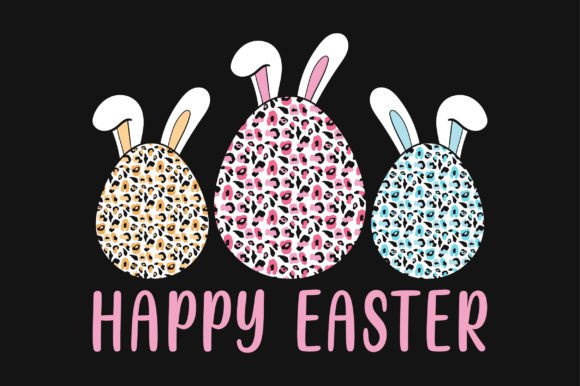
Review: Happy Easter SVG for Real Embroidery Projects
As a designer who spends more time staring at stitch simulations than actual sunlight, I approach new design assets with a healthy dose of skepticism. We've all been there: you buy a cute graphic online, only to realize it falls apart the moment you try to convert it into a machine embroidery design. That is why I took a close look at the Happy Easter SVG Sublimation T-Shirt file set not just as a digital image, but as a potential candidate for real-world stitching. While the product listing highlights its utility for sublimation and mentions it contains 100 vector shapes that are easy to recolor, my job is to determine if this Graphics package holds up under the needle.
First Impressions: Shape and Scalability
The immediate selling point here is the claim of "100 vector shapes." For an embroiderer, this is music to our ears. A design composed of many distinct vector elements usually means cleaner lines and better control when we move from screen to hoop. When I opened the SVG and EPS files included in the Happy Easter SVG Sublimation T-Shirt pack, the layout felt balanced. It has that cheerful, bouncy mood essential for holiday embroidery, avoiding the stiff, clip-art look that often plagues seasonal designs.
The visual personality is friendly and approachable, making it a strong contender for personalized gifts. However, because this is technically a sublimation design first, the details are likely optimized for ink, not thread. This distinction is crucial. In sublimation, you can have tiny, intricate lines that vanish or cause bird-nesting in embroidery. Before committing this to a client's custom apparel, one must analyze the density of those 100 shapes. Are they large enough to support a fill stitch, or will they require a delicate running stitch outline?
Real-World Application: The Spring Boutique Scenario
Let's place this design in a realistic scenario. Imagine you run a small shop preparing for the spring rush. You want to create a line of coordinated items: a canvas tote bag design for moms, a sweatshirt embroidery piece for teens, and perhaps some matching baby embroidery on onesies. The Happy Easter SVG Sublimation T-Shirt fits this narrative well because of its versatility in color changes.
For the tote bag, the design's open shapes would work beautifully with a textured fabric texture like natural cotton. You could digitize the larger elements as appliqué, adding a layer of fabric beneath the stitches to give it that boutique feel. For the sweatshirt, the resizable nature of the vectors allows you to scale the design up for a bold back print or down for a subtle chest logo. The ability to easily change colors means you can offer pastel variations for girls and brighter, primary tones for boys without needing five different file versions.
However, caution is needed when applying this to curved surfaces like caps. If the design has wide, solid areas, it might pull or pucker on the structured front of a hat. In such cases, breaking up the solid fills with lighter stitch patterns or reducing the overall size is necessary to maintain the integrity of the finished product.
Navigating Technical Challenges
While the Happy Easter SVG Sublimation T-Shirt offers great potential, it is not a plug-and-play embroidery file straight out of the box. Since the source files are AI, EPS, SVG, and PNG, you are responsible for the digitization process. This is where experience matters. You cannot simply import the SVG into your embroidery software and hit "go."
You must pay close attention to stitch density. Vector shapes designed for print often have sharp corners and tight curves that translate poorly to thread. A sharp 90-degree angle in a vector file can result in a messy cluster of threads if not handled with proper underlay or corner-breaking techniques. Additionally, if the design includes tiny text or very thin lines, these might disappear entirely on thick towels or get lost in the pile of a fleece blanket.
Fabric choice is another critical factor. On dark fabrics, the negative space in the design needs to be managed carefully. Unlike sublimation, which dyes the fabric, embroidery sits on top. If the design relies on the background color to define shapes, you may need to add satin borders or backing stabilizers to ensure the contrast pops. Always test the design on scrap fabric that matches your final material. What looks crisp on a white t-shirt mockup might look muddy on a heather grey hoodie.
Practical Notes for the Professional Maker
To get the most value out of this Crafts asset, follow these practical steps before selling or gifting:
- Test on Scraps First: Never stitch a final product without running a sample on the exact same fabric and stabilizer combination.
- Check Thread Contrast: Ensure your chosen thread colors provide enough separation between the 100 vector shapes so the design doesn't look like a blob from a distance.
- Review Stitch Types: Decide which elements work best as satin stitch outlines versus fill stitch areas. Don't be afraid to simplify complex vectors.
- Confirm Hoop Size: Even though the design is resizable, ensure your scaled version fits comfortably within your machine's hoop without hitting the frame.
- Inspect Small Details: Zoom in on the tiniest elements. If they are too small to stitch cleanly, consider removing them or merging them with larger shapes.
- Mockup Verification: Create black-and-white mockups to check the silhouette. If the design loses its identity without color, the shape hierarchy needs adjustment.
- Licensing Check: The product description mentions commercial use implications indirectly by targeting sellers. Always confirm the specific license terms regarding selling finished physical goods versus reselling the digital file itself.
Final Verdict on Value and Appeal
The Happy Easter SVG Sublimation T-Shirt is a solid foundation for a creative entrepreneur. Its strength lies in its clean vector construction and adaptability. For an Etsy seller or handmade shop owner, this design offers the flexibility to create a cohesive brand across various products, from kitchen towels to nursery decor. It enhances brand consistency because the core artwork remains recognizable regardless of the medium.
However, its true value is unlocked only through skilled digitization. It is not a magic button but a high-quality raw material. When treated with the respect of a professional embroidery project, accounting for fabric tension, stitch direction, and density, it can elevate a simple garment into a cherished keepsake. Customers trust handmade quality, and they can tell the difference between a rushed auto-digitized job and a thoughtfully stitched piece. By taking the time to adapt this design properly, you ensure that your small shop product stands out in a crowded market, delivering both visual appeal and lasting durability.